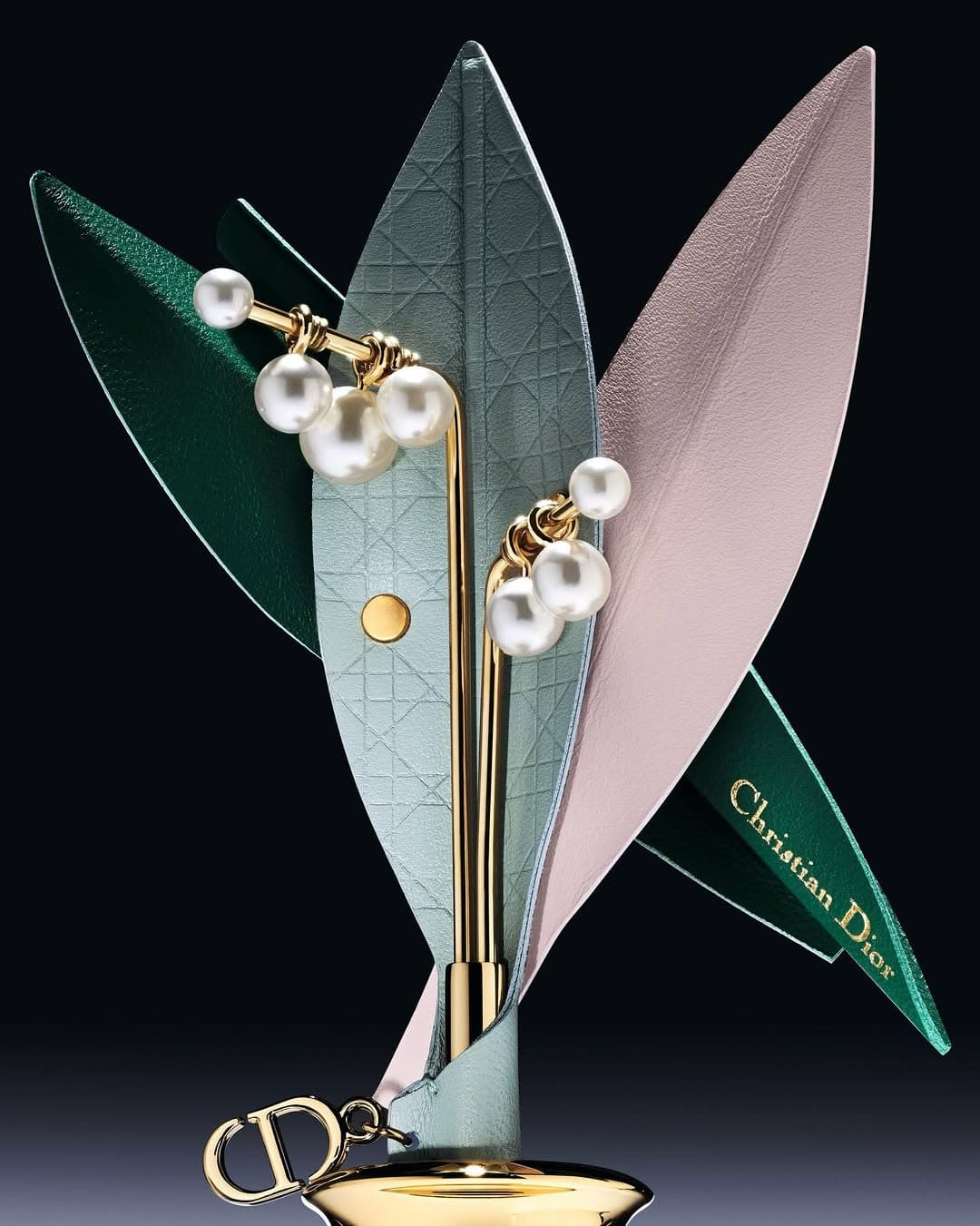
There are perfumes that enter a room like a grand staircase—and then there’s Dior Le Muguet, which prefers a gloved whisper. The kind that brushes past your pulse point and leaves behind a notion: spring, but dressed properly. With Les Récoltes Majeures, Dior’s exceptional collection takes this lily-of-the-valley daydream and gives it a couture spine—cannage motif included, because of course it is. This isn’t fragrance as mere pleasure. It’s fragrance as craft, with the House’s atelier-level precision visible in every detail.
And yes, in an era where “quiet luxury” is too often code for beige boredom, Dior’s move feels pointed. Le Muguet doesn’t shout; it doesn’t need to. It simply shows you what happens when heritage is treated like a living discipline—not a museum label.

Dior Le Muguet in Les Récoltes Majeures: the couture of a scent
Calling Dior Le Muguet “adorned” almost undersells the gesture. In Les Récoltes Majeures, the bottle becomes a miniature object of devotion—one part perfume, one part collectible, entirely Dior. The cannage motif (that instantly recognizable lattice) reads like a wink to the House’s most intimate codes, famously tied to the Napoleon III chairs used in Christian Dior’s early salons. It’s a detail that fashion people clock in half a second—and everyone else feels as a kind of elegant order.
If you want the official framing, Dior makes its ambitions clear on Dior and within Dior Beauty: this is an exceptional collection, where the bottle isn’t packaging so much as a couture “finish.” The point is not novelty. The point is the hand.
The cannage motif: an unmistakable Dior signature
Cannage is one of those design cues that functions like a private password—subtle, specific, instantly legible if you know. Its origin story is fashion-lore perfection: the chairs at Dior’s presentations became a graphic language, later reappearing in leather goods, accessories, and now—here—in the realm of perfume. For the curious (and the historically inclined), the motif is closely associated with the House’s signatures and the broader vocabulary of Christian Dior.
What I admire is the restraint. The cannage doesn’t bully the design; it refines it. Think of it like good tailoring: structure you feel more than you see, until you catch the light just right.
Why lily-of-the-valley still feels like the most Parisian flower
Lily-of-the-valley—muguet—has a cultural grip in France that never quite loosens. It’s associated with May Day, good fortune, and that particular French way of romanticizing the everyday. There’s also its delicious paradox: delicate bell-shaped blooms with a bright, green-lit innocence… and a quietly toxic botanical reality. (Beauty has always had teeth.)
In fragrance, muguet is notoriously hard to “extract” in the straightforward way we imagine flowers being captured; perfumers build it as an illusion, a meticulously composed accord. That, to me, is exactly why it suits Dior. The House has always understood that the real luxury is construction—what’s engineered to feel effortless.
If you’re in a spring mood, pair this read with our edit on the spring fragrances that actually feel chic—the ones that don’t collapse into candied clichés by lunchtime.
Craftsmanship as the main character (not just a marketing line)
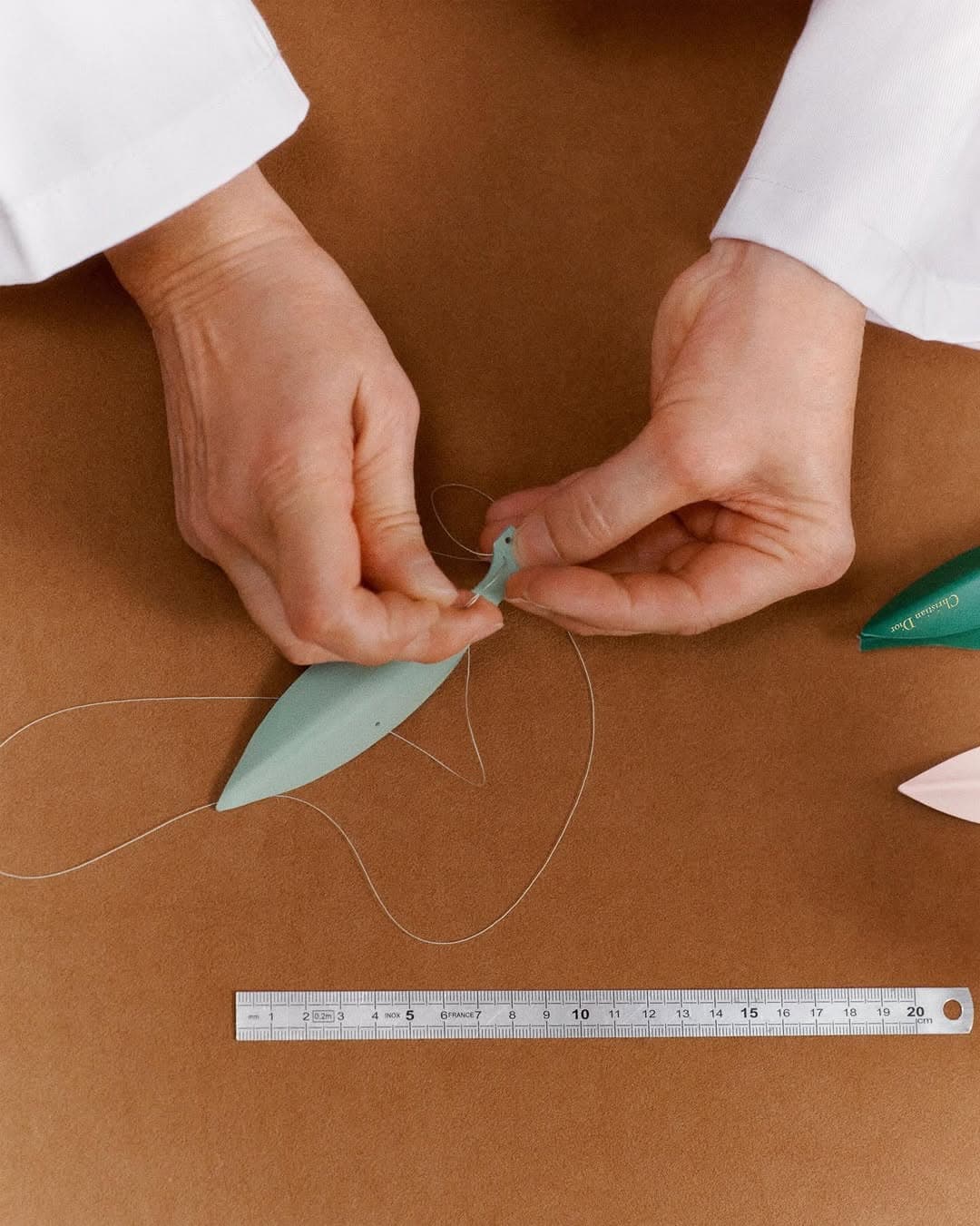
Luxury fragrance has reached a moment of visual escalation—special bottles, limited drops, collectible everything. The risk is obvious: theatrics without substance. Les Récoltes Majeures avoids that trap by treating the object like a piece of couture logic. The couture details aren’t random embellishments; they telegraph time, tools, and the human insistence on doing things properly.
This is where Dior’s narrative makes sense. When a House is built on silhouette and savoir-faire, it’s almost strange when fragrance doesn’t behave like fashion. Here, it does. Le Muguet is presented as an heirloom in waiting—something you keep on a vanity the way you keep a good piece of jewelry: not to prove anything, but because it pleases you to live with it.
- For collectors: the couture-level bottle work makes it feel closer to an object d’art than a disposable spritz.
- For minimalists: the design codes are discreet; the effect is polished, not performative.
- For Dior devotees: cannage is the sort of reference that rewards attention—like spotting a perfectly cut hem.
Obsessed with how fashion houses translate heritage into modern desire? You’ll want our deep-dive on quiet luxury brands that do it right (read: not just expensive, but exacting).
How to wear Dior Le Muguet without making it feel precious
The trap with anything “exceptional” is treating it like it belongs behind glass. Don’t. Dior Le Muguet is at its best when it’s lived in—worn with a crisp white shirt, a black cashmere knit, bare skin after a shower. Let it play against the everyday; that’s where refinement shows itself.
Three moments that suit Le Muguet
- Morning meetings: when you want clarity, not volume.
- Gallery afternoons: the scent equivalent of good lighting and clean lines.
- Evening dinners: especially if the dress is simple and the jewelry is deliberate.
If you’re building a wardrobe of scent the way you build an actual wardrobe—signature pieces, not clutter—bookmark our guide to finding a signature scent. Consider it fragrance styling, minus the fuss.
Le Muguet in Les Récoltes Majeures ultimately reads like a House reminding us what it does best: taking something emotional and making it precise. A flower becomes a code. A bottle becomes a garment. And the whole thing, quietly, becomes a flex.
Photo Credits
Cover image courtesy of Dior Beauty Official. Additional images courtesy of their respective owners.