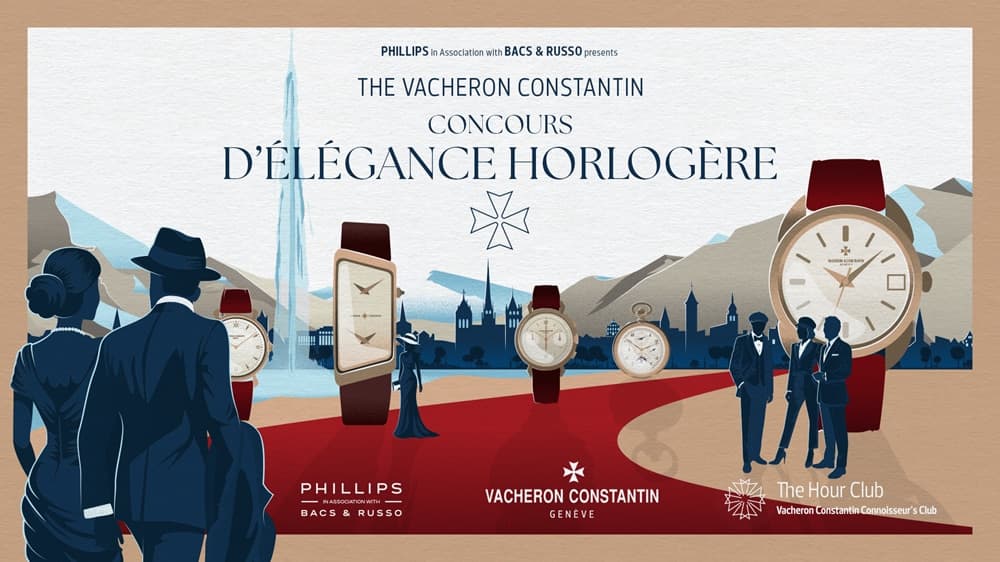
There’s a particular hush that falls over a room when a truly great watch is produced—less “look at me,” more “listen.” It’s the sound of a caseback being eased open, of a crown turned with buttery resistance, of a collector pausing before they speak because the object has already said enough. That’s the mood Vacheron Constantin is betting on with the newly announced Vacheron Constantin Concours d’Élégance Horlogère: not a marketing stunt, but a stage for connoisseurship.
Launched at the invitation of Phillips in Association with Bacs & Russo, the competition opens its velvet ropes to enthusiasts and collectors worldwide who own eligible Vacheron Constantin pocket watches and wristwatches spanning 1755 to 1999. Seven prizes will be awarded in Geneva on 10 November 2026, judged by an international jury co-chaired by Aurel Bacs (Senior Consultant at Phillips in Association with Bacs & Russo) and Christian Selmoni (Vacheron Constantin’s Director of Style and Heritage). The message is clear: the guardians of archival beauty are being invited into the spotlight—politely, but decisively.
Vacheron Constantin Concours d’Élégance Horlogère: Why This Matters Now
The collector world has never been louder. Auction results detonate across Instagram within minutes; “grails” are named and renamed depending on the week’s hype cycle. And yet, the truest form of elegance in horology has always been quieter—found in proportion, restraint, finishing, and that elusive sense of inevitability (as if the watch had no choice but to look exactly like that).
This is precisely why a concours model feels refreshing. The term borrows its glamour from automotive culture—think ribboned lawns, whispered valuations, and judges trained to spot the difference between patina and neglect. Transpose that to watches, and you get something deliciously old-world: scholarship, taste, history, and condition assessed with seriousness rather than speed.
Vacheron Constantin—founded in 1755, with a continuous history that makes most luxury brands look like enthusiastic toddlers—has earned the right to set such a tone. If you need the refresher, start with Vacheron Constantin’s official site, or the concise historical grounding on Wikipedia. Then come back and imagine what it means to ask collectors to present their pieces not as flexes, but as living documents.
Phillips + Bacs & Russo: The Gravity Behind the Glamour
Phillips in Association with Bacs & Russo isn’t exactly known for casual opinions. When Aurel Bacs enters the frame, it signals a certain rigour—an insistence on provenance, on seriousness, on the kind of detail work that separates legend from lore. If you’re curious about the house’s broader watch universe, Phillips lays it out plainly—though the real drama, as always, happens under the loupe.
Eligibility, Dates, and How to Enter
For those already glancing toward the safe (or the bank vault—no judgment), the essential parameters are pleasingly specific. The competition is open to owners of Vacheron Constantin pocket watches and wristwatches produced between 1755 and 1999. Registration runs from 19 January to 30 April 2026, and entries can be submitted online and through Vacheron Constantin boutiques.
The awards will be announced on 10 November 2026 in Geneva—because if you’re going to crown elegance, you do it in the city that practically invented modern watch culture.
Seven Prizes, Seven Categories—And the Taste Behind the Metrics
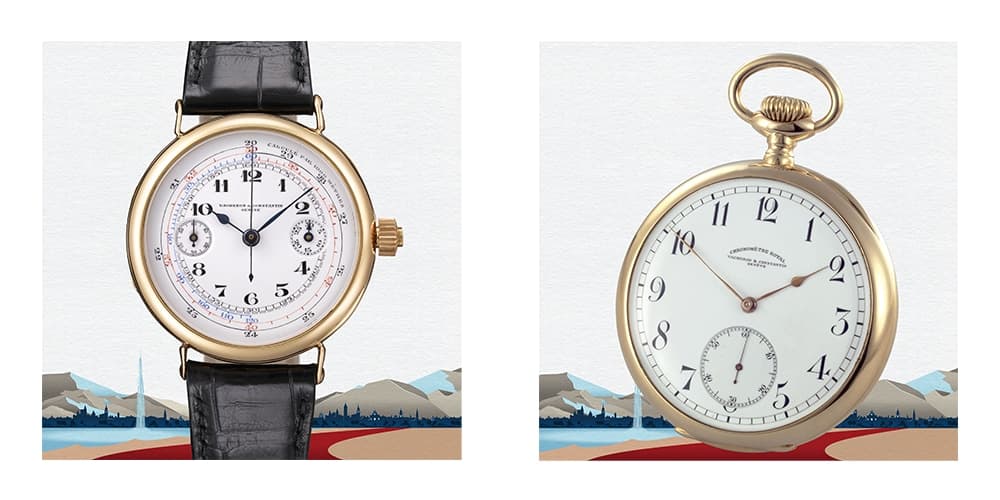
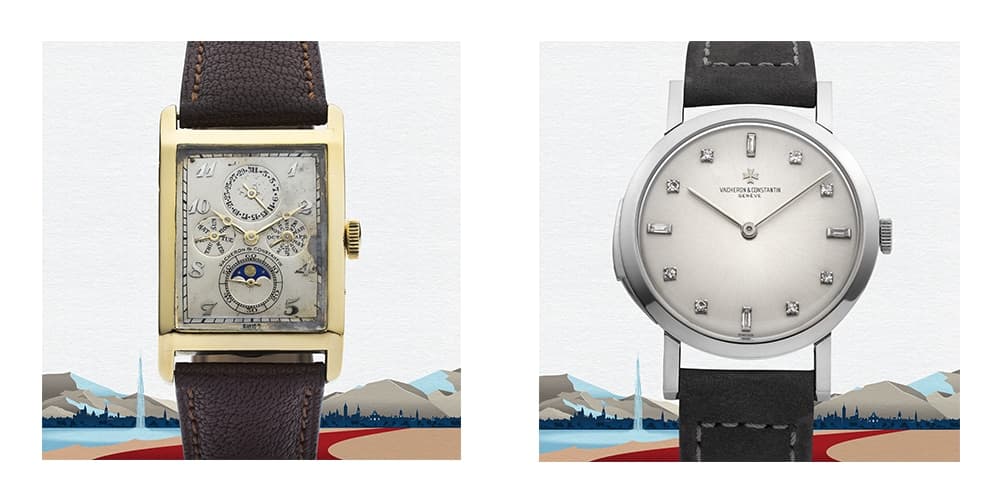
Seven prizes will be awarded across seven categories, with watches judged on nine criteria. The brand hasn’t positioned this as a contest of mere rarity (a relief, frankly). Instead, the insinuation is more layered: condition, coherence, artistry, and the intangible magnetism of an object that feels both of its era and oddly immune to time.
Collectors know this instinctively. A watch can be complicated yet cold; rare yet wrong. And then there are the ones that stop you mid-sentence.
What the Best Pieces Will Have (Beyond Price)
Let’s be honest: “elegance” is one of the most abused words in luxury. It’s pasted onto everything from hotel lobbies to handbags that look like tax audits. In horology, though, elegance has tells. It lives in the line between lugs and case, the confidence of typography, the discipline of a dial that doesn’t beg for attention. It’s also in the evidence of care—watches that have been worn, yes, but not mauled by trends.
If you’re a collector considering entry, consider the narrative your watch carries. Not a sales pitch—a biography. Who commissioned it? Where did it travel? What era does it distill? A pocket watch from the 19th century doesn’t need to “perform” modernity; it needs to be itself, lucidly. A late-century wristwatch, especially pre-1999, should feel like a final exhale before the millennium turned everything into branding.
For more on how luxury houses turn heritage into something contemporary (without turning it into parody), you might enjoy our take on quiet luxury, or the way collectors are reshaping the market in vintage watches as investment. And if Geneva is calling your name for November, we’ve mapped the city’s indulgent side in our Geneva luxury guide—because a concours deserves proper surroundings.
The Editorial Take: A Contest That Might Actually Improve the Conversation
Here’s my hope: that the Vacheron Constantin Concours d’Élégance Horlogère shifts the discourse away from dopamine buying and toward discernment. Not because collecting should be solemn—it shouldn’t—but because elegance is a muscle, and the culture has let it atrophy.
Will some entrants arrive armed with extraordinary pieces and equally extraordinary insurance policies? Of course. But the most interesting outcome would be subtler: collectors choosing to restore responsibly, research deeply, and present their watches with the pride of stewardship, not conquest. In a world obsessed with the next drop, a concours invites something almost radical—patience.
Photo Credits
Images courtesy of their respective owners.