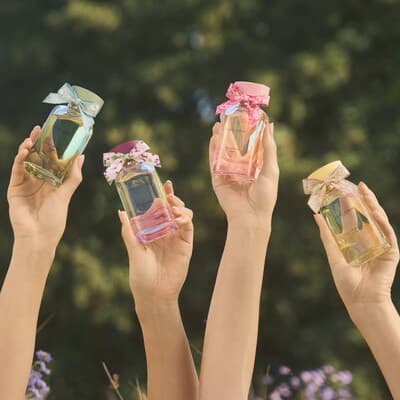
There’s a particular kind of British romance that doesn’t need to announce itself. It arrives quietly—on a sleeve scattered with tiny primroses, in the soft insistence of floral wallpaper, in the memory of rain on box hedges outside a country house you’ll never own. Now, in news that feels both nostalgic and oddly modern, the Laura Ashley fragrance collection has arrived as a quartet of parfums inspired by the brand’s archival prints—and, by extension, the countryside dream Laura Ashley has been selling (beautifully) for decades.
Launched in partnership with Nirvana Brands and crafted in Wales with French fragrance house Robertet, the new Parfum Collection is priced at £89 for 100 ml and available now via Next (next.co.uk) and lauraashleybeauty.com, with global retail expansion planned throughout 2026. The perfumers behind the scenes: Clément Marx and Romain Almairac—names that signal this isn’t just a licensing exercise with a pretty bow.
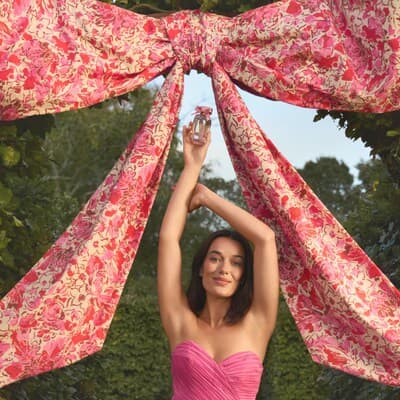
Laura Ashley fragrance collection: four scents, one pastoral fantasy
Let’s be honest: plenty of heritage brands treat fragrance as an afterthought, a cashmere-adjacent accessory to be sold at the till. What’s more interesting here is the premise—perfume as print, as pattern, as moodboard. Laura Ashley’s archive is practically a cultural artefact (a shorthand for a certain Englishness, for better and worse), and translating that into scent is a smart, emotionally literate move.
As Rachel Terrace, Chief Commercial & Growth Officer at Marquee Brands, frames it, the fragrances are designed to channel “romance, femininity and timeless elegance” tied to the British countryside. Those words can feel like a press-release perfume in their own right—until you remember how powerfully a good scent can time-travel.
Serene Meadows
The name alone reads like a Sunday drive with the windows cracked open. Serene Meadows aims for that breathable, outdoorsy calm—less “flower shop,” more “green stems crushed between fingers.” Think: an airy, clean impression that’s made for linen dresses and the kind of quiet confidence you can’t counterfeit.
Floral Fancy
Floral Fancy is the extrovert of the set—lipstick in scent form, a print that knows it’s the main character. If Serene Meadows is morning light, this is late afternoon in a garden that’s slightly overachieving. It’s the one you wear when you want compliments from strangers in galleries.
Joy of Primrose
Primrose is such a British note, culturally if not always literally—tender, optimistic, a little storybook. Joy of Primrose leans into that gentle prettiness without (one hopes) tipping into the powdery trap. The best primrose fantasy is bright, petal-fresh, not old handbag.
Wild Woodland
Wild Woodland suggests shade: damp earth, bark, that dark-green hush you get under trees just after rainfall. In a world oversaturated with sugar-heavy gourmands, a woodland-leaning perfume feels like relief—an elegant reset button.

From wallpaper to wrist: the archive as modern luxury
The subtext here is cultural. Laura Ashley isn’t merely a brand; it’s an atmosphere—one that has floated through British homes and global closets since the 1950s. (Yes, it’s also a punchline to some, a shorthand for chintz. But fashion’s current love affair with “grandmillennial” charm—and the broader return to craft, heritage, and domestic romance—makes this timing feel sharp.) If you’ve been tracking the rise of nostalgic femininity, you’ll recognize the same impulse in bows, corsetry, and soft-focus beauty.
Perfume is an especially persuasive vehicle for this kind of revival because it bypasses taste debates. No one needs to see your fragrance the way they see your ruffles. It’s private—until it isn’t.
For readers who love beauty with a story (and a house-style), this launch sits neatly alongside the broader movement toward wardrobe-scent pairing—something we’ve been watching through the lens of quiet luxury beauty and the way spring perfumes are shifting away from predictable sweetness to more textured compositions.
Made in Wales, perfected with French fragrance house Robertet
There’s also something pleasingly counterintuitive about this production story: Wales for manufacture, Robertet for expertise, and an archive rooted in British domestic aesthetics as the creative spark. That triangulation—local, French, heritage—is how modern luxury often works when it’s done well. Cecile Budge, Chief Operations Officer at Nirvana Brands, positions the range as a careful collaboration, not a quick bolt-on. And in beauty, you can usually smell the difference.
If you want the brand context, Laura Ashley’s history as a design phenomenon is worth revisiting via Wikipedia’s overview—or, better, by looking closely at the prints themselves and seeing how they coded a whole ideal of womanhood, home, and countryside ease.
How to choose your scent (and wear it like an editor)
- If you’re a minimalist: start with Serene Meadows—fresh, subtle, the kind of fragrance that reads expensive because it refuses to shout.
- If you’re a romantic: Joy of Primrose will likely speak your language (pearls optional, good prose encouraged).
- If you’re a maximalist: Floral Fancy—because sometimes the point is to be remembered.
- If you’re allergic to clichés: Wild Woodland, worn with a crisp white shirt and a slightly wicked sense of humour.
The best advice? Don’t choose the scent that sounds most like you—choose the one that feels like a place you want to return to. The Laura Ashley fragrance collection isn’t trying to reinvent perfumery. It’s doing something more difficult: turning memory into a modern accessory, and making it feel chic again.
For more on the way heritage codes are being reinterpreted right now, our ongoing edit of British style trends is a useful companion piece.
Photo Credits
Cover image and additional product images courtesy of their respective owners. Press imagery references: Laura Ashley Parfum Collection and select scents via PR distribution sources (including provided links).