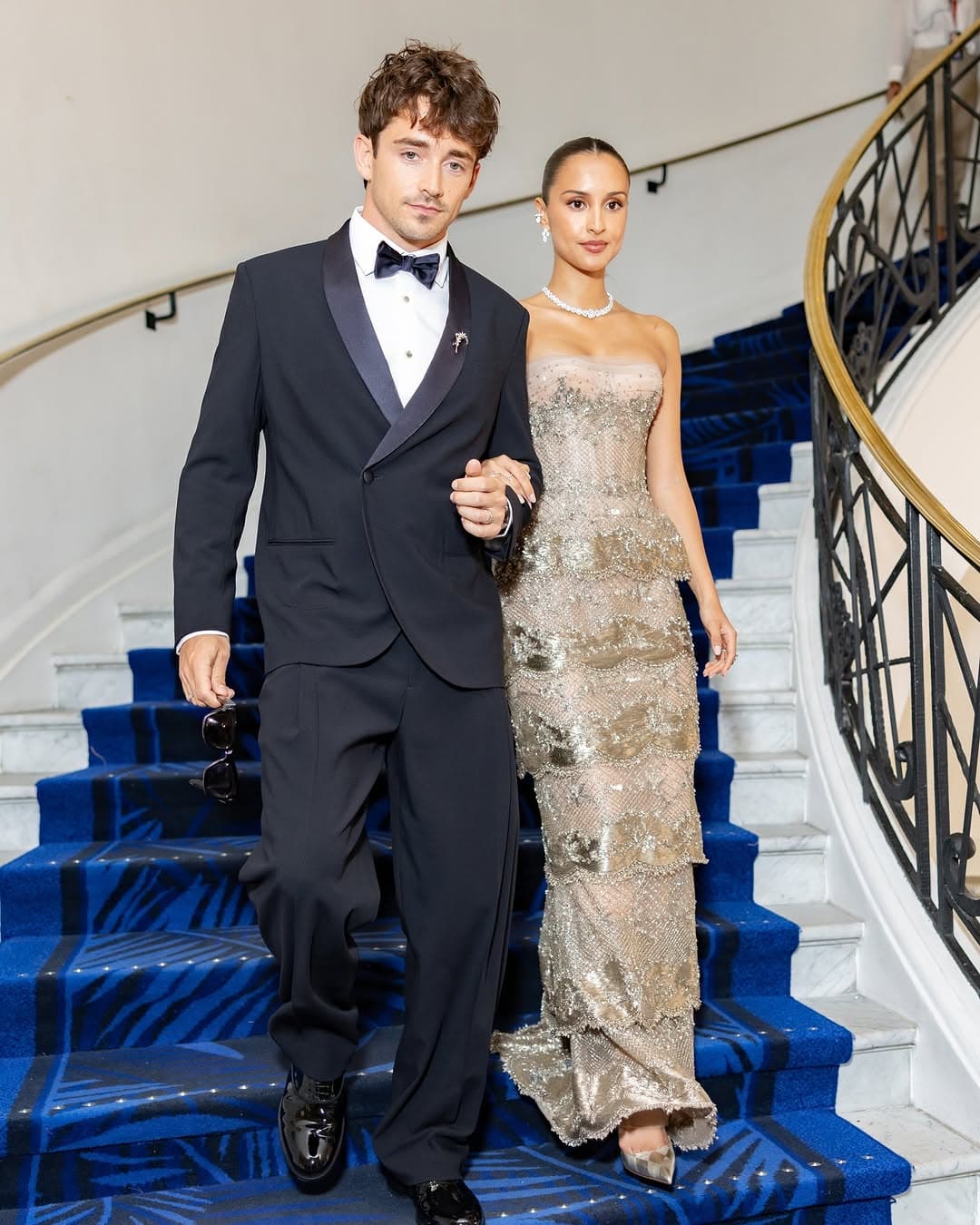
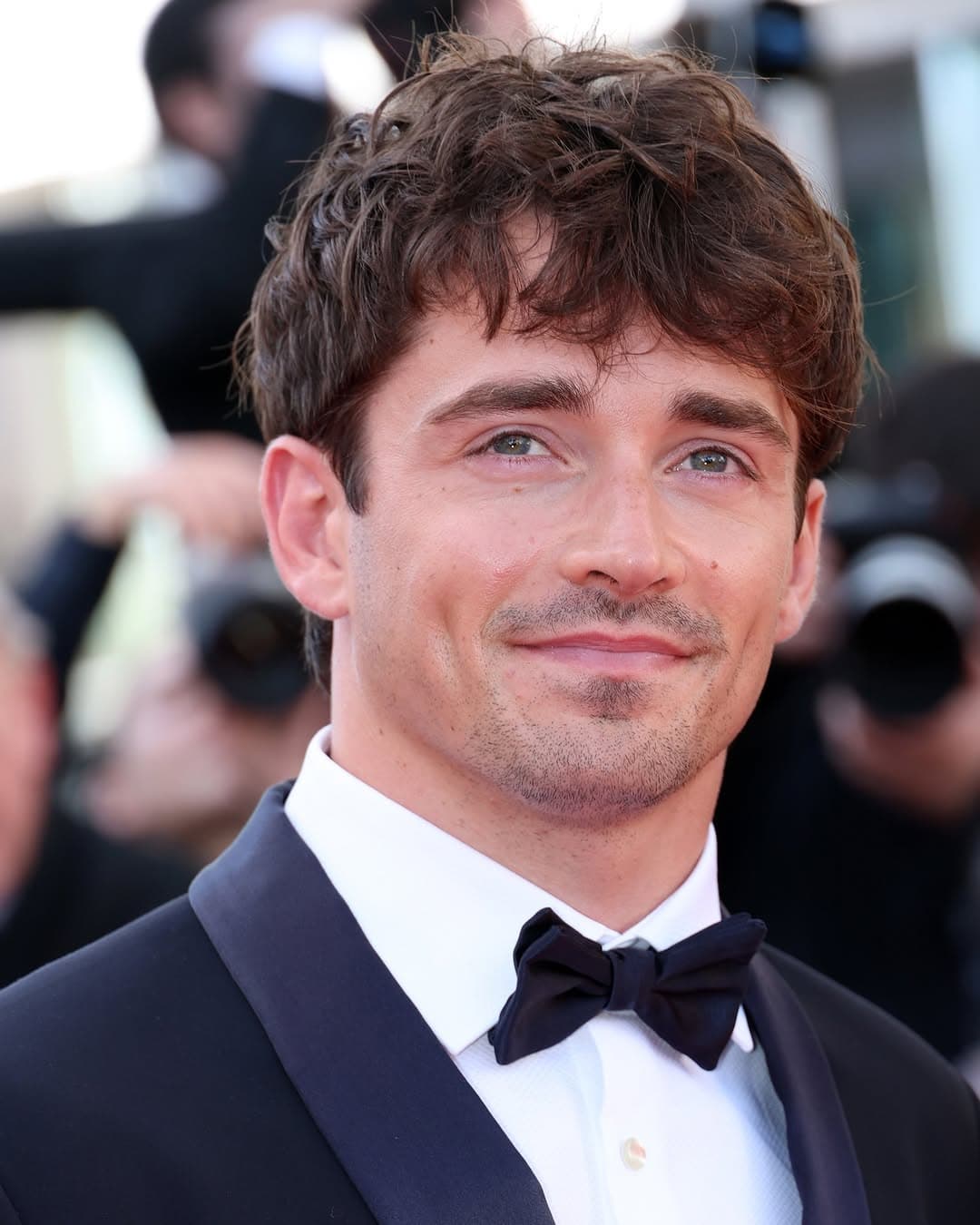
The Cannes Film Festival has a way of flattening hierarchies. Movie stars, moguls, models, and, increasingly, motorsport royalty all move through the same salt air and flashbulb weather. This year, the headline belonged to a different kind of leading man. Charles Leclerc Cannes appearance, alongside his wife Alexandra, was not the usual celebrity cameo. It read as a quiet declaration, a reminder that modern glamour is often built on discipline, timing, and the ability to look effortless while the world keeps score.
Leclerc has always had a camera friendly composure, even when a race weekend is unspooling into chaos. Cannes asks for a similar steadiness, only the stakes are aesthetic. The carpet is unforgiving, the light is clinical, and the expectations are oddly old world. What registers is not noise but calibration. In that sense, he and Alexandra made perfect Cannes sense, polished without looking lacquered, present without trying to dominate the frame.
Charles Leclerc Cannes appearance, decoded
There is a particular tension to Cannes style that the truly savvy understand. You are dressing for theatre, but not costume. You are dressing for tradition, but not nostalgia. The Leclercs moved through it with a restraint that felt intentional. He is a driver whose public image is built on focus and control, and you could see that same logic translated into formalwear, clean lines, no frantic embellishment.
Alexandra, too, played it smart. Cannes can swallow people whole when they overreach. Her presence read as assured rather than performative, the kind of composure that photographs well precisely because it is not pleading for attention. Together, they looked like a couple who understands that the point of a red carpet is not to shout, it is to linger in the mind.
For those tracking how Formula 1 keeps threading itself through fashion and film, this is part of a larger cultural migration. The sport is no longer a sealed world of paddock passes and pit wall jargon. It is now a public facing aesthetic, one that borrows the precision of engineering and sells it back as lifestyle. If you have been watching the social calendar tilt toward racing, Cannes was simply the most elegant proof.
Why Cannes keeps courting Formula 1
Cannes is a festival, yes, but it is also a marketplace for images. Formula 1 is the same, a global machine that trades in access, exclusivity, and the seduction of speed. Cannes loves the iconography, the slightly dangerous sheen, the suggestion of power held in check. F1 benefits from the association with cinema’s old glamour, the idea that a man in a tuxedo can still look like a threat in the best way.
If you want the official temperature of the moment, start with FORMULA 1®, which has become as adept at storytelling as it is at lap times. And if you want the Cannes side of the bargain, the festival’s own home base is the cleanest reference point for the week’s rituals and rules, from screenings to formalwear expectations at Festival de Cannes.
The Leclercs, the Riviera, and the new luxury uniform
There is a reason the French Riviera keeps functioning as a lifestyle shorthand. It is bright, controlled, and unapologetically curated. The best outfits here do not fight the setting. They refine it. Crisp tailoring looks sharper against that pale Mediterranean light. Minimal jewellery reads expensive because it is not competing with the scenery. The Leclercs understood this rhythm, the way Cannes punishes excess and rewards clarity.
And yet, it would be a mistake to reduce this to clothes alone. This is also about proximity, to film, to culture, to the kind of international crowd that Cannes reliably assembles. It signals a confidence in moving between worlds. For Formula 1’s leading figures, that fluency is increasingly part of the job.
For more on how celebrity style is being rewritten off the track, see our ongoing coverage in Celebrity. If your interest is the luxury ecosystem that makes Cannes tick, from jewellery houses to hospitality to the careful choreography of appearances, our Luxury section keeps a close eye on the signals. And for the wider context of modern red carpet dressing, where tailoring and brand codes often matter as much as personality, browse Fashion.
A quick note on the Leclerc factor
Leclerc’s appeal has never been purely about performance, though that is the foundation. It is also about temperament, the sense that he is both intensely contemporary and oddly classical. The red carpet does not require you to be dramatic, it requires you to be legible. He is. Cannes simply gave that quality a different backdrop.
For the brand minded reader, it is worth remembering that Leclerc’s public presence is part of a bigger, carefully maintained machine. Ferrari’s universe, for instance, has always understood the interplay of sport and style. Even when you are not thinking about engines, you are thinking about desire. Their world is neatly laid out at Ferrari, where heritage is presented with the same polish as a freshly detailed car.
What this Cannes moment says about modern celebrity
The old model of celebrity was scarcity. The new model is omnipresence, but curated. Cannes remains one of the few places that can still make an appearance feel like an event, not content. That is why Charles Leclerc Cannes appearance landed. It did not feel like an algorithmic stopover. It felt like a conscious step into a different kind of spotlight, one with history behind it and judgment in front of it.
There is also something undeniably human in seeing a couple navigate the spectacle together. Cannes can be a lonely parade of individual branding. The Leclercs offered a softer narrative, still polished, still strategic, but warmer at the edges. In a week built on performance, that kind of ease reads as its own quiet power.
Photo Credits
Cover image courtesy of FORMULA 1®. Additional images courtesy of their respective owners.