Capes are back—again—and this time they’re less costume, more couture. At the 2026 TIME100 Gala, Dakota Johnson arrived in a fresh-off-the-runway Valentino look that made one thing clear: the red carpet is fully embracing flowing, draped outerwear as the easiest route to instant drama.
A Valentino cape moment with runway-level impact
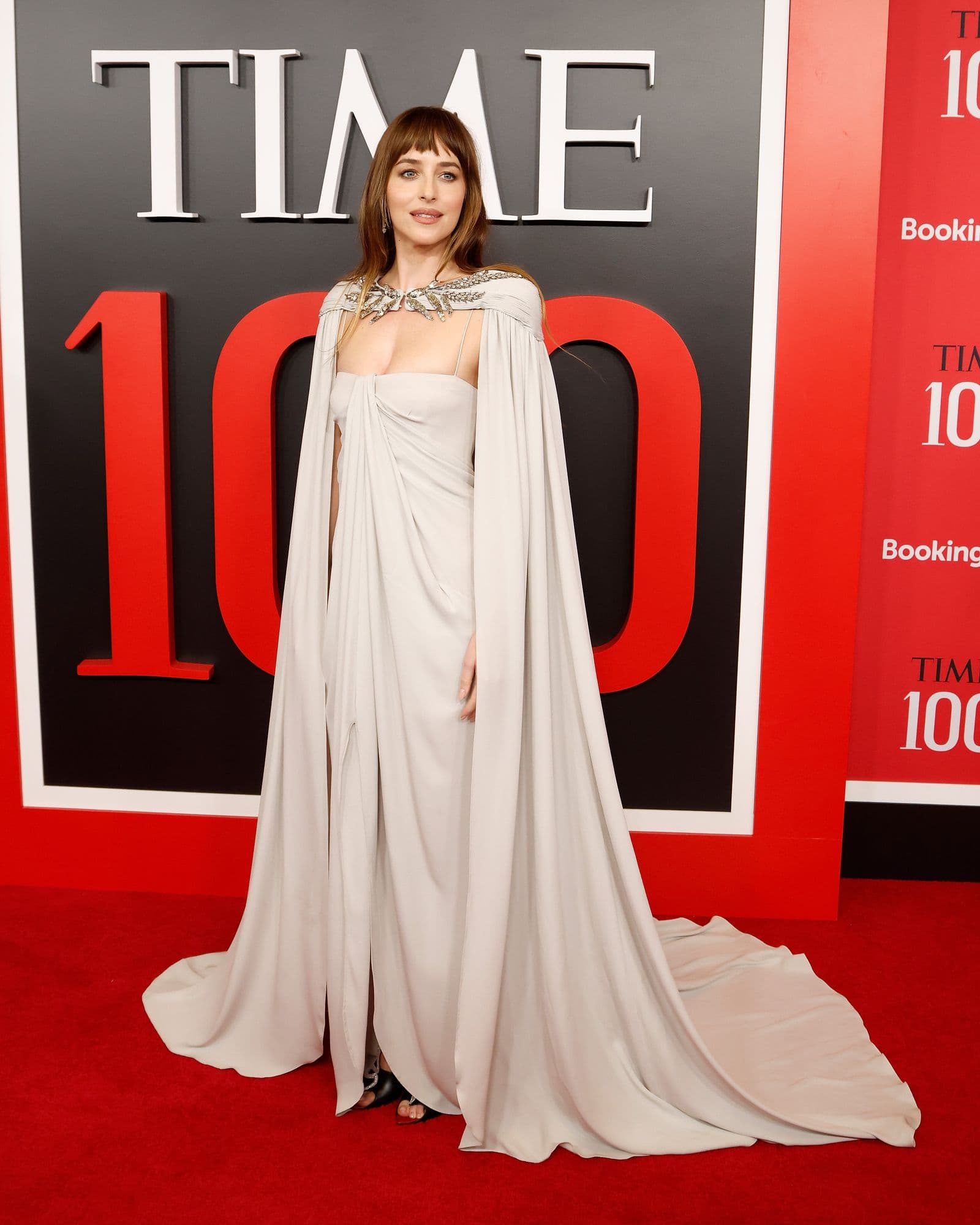
Johnson’s gown leaned into a modern Grecian mood: a cream, column-like silhouette paired with an ornate neck detail that did double duty. The embellished neckline fastened a floor-length cape and train, giving the dress a sense of movement that photographed beautifully from every angle—part classic Hollywood, part contemporary runway statement.
The effect was deliberate and architectural: rather than adding a separate wrap or shawl as an afterthought, the cape was integrated into the design, creating a single, uninterrupted line from neckline to hem. It’s exactly the kind of styling shortcut stylists love: one piece that reads “full look,” even before the jewelry is considered.
Details that kept the look modern
- Embellished neck feature: A shimmering, sequin-feather style detail that functioned like a glamorous clasp.
- Fluid cape + train: Long, sweeping drape that amped up red-carpet presence without requiring heavy layering.
- Accessories: Snake-detail heels that added texture and edge.
- Beauty: Her signature soft-glam approach—polished, understated, and intentionally not competing with the cape.
Why capes (and scarf-like draping) are everywhere right now
The cape’s resurgence isn’t happening in isolation. Recent red carpets have been filled with scarf-necklines, attached shawls, and draped sleeves—silhouettes that create volume and movement while still feeling sleek. The appeal is simple: capes bring instant spectacle, but they’re often more wearable than heavy coats or complicated layering.
In a season where red-carpet fashion is balancing minimalism with maximal impact, capes hit the sweet spot. They:
- Photograph well: Movement reads as luxury in still images and video.
- Elevate simple silhouettes: Even a streamlined gown becomes “event dressing” with a dramatic drape.
- Signal confidence: Capes take up space—stylishly.
How this fits Dakota Johnson’s evolving style narrative
Johnson has become a reliable reference point for modern red-carpet dressing: sometimes minimalist, sometimes daring, often anchored by clean lines and confident restraint. This TIME100 look also underscores her affinity for Alessandro Michele’s nostalgic sensibility—romantic, referential, and rich in detail—while still feeling contemporary through its pared-back palette and streamlined shape.
It also offers a noticeable counterpoint to the “naked dress” moments she’s known for. Where sheer, body-baring looks rely on transparency and silhouette, the cape look relies on coverage with drama—proving that impact doesn’t require exposure.
Not a solo trend: other TIME100 Gala cape silhouettes
Johnson wasn’t the only one leaning into the cape effect. Other attendees, including Hilary Duff and Kate Hudson, appeared in cape-inspired shapes and draped designs, reinforcing the idea that the cape is less of a novelty and more of a returning red-carpet staple.
Whether it’s a true attached cape, a scarf-like neckline, or a shawl illusion built into a dress, the takeaway is the same: draped outerwear is one of the most reliable ways to look elevated, cinematic, and unmistakably “gala-ready.”
The bottom line
At the 2026 TIME100 Gala, Dakota Johnson’s Valentino cape gown didn’t just deliver a standout fashion moment—it captured a wider movement across celebrity style. Capes are back on the red carpet because they’re elegant, high-impact, and timeless. And if this gala is any indication, the cape revival isn’t a passing phase—it’s becoming a new red-carpet default.